
NEP 2020 Lab Guidelines: Experiential STEAM, Vocational Skills & 10-Bagless Days Blueprint (2026)
1. The Paradigm Shift: From Rote Memorization to Experiential Labs
Paragraphs 4.4 through 4.8 of the National Education Policy 2020 mandate that experiential learning must become the central pedagogy across all stages of school education. This transition encompasses hands-on exploration, arts-integrated and sports-integrated curricula, storytelling methodologies, and critically, inquiry-driven laboratory experimentation.
Under legacy educational formats, laboratories were restricted spaces reserved almost exclusively for senior secondary (Classes 11 and 12) specialized science streams, with secondary students limited to passive demonstrations. NEP 2020 inverts this architecture: hands-on experimentation, coding, design thinking, and vocational exploration are made compulsory beginning in Class 6.
The National Curriculum Framework for School Education (NCF-SE 2023) further emphasizes multidisciplinary STEAM (Science, Technology, Engineering, Arts, and Mathematics) spaces where disciplinary boundaries between physical sciences, artistic expression, and computational modeling dissolve.
2. Stage-Wise Laboratory Integration under NEP 5+3+3+4 Design
📚 National Credit Framework (NCrF): At the secondary stage, vocational laboratory courses carry equal academic credit weighting toward graduation and board examinations.
3. NCF-SE 2023 Three Forms of Work Framework
NCF-SE mandates that modern school laboratories must accommodate three broad dimensions of human productive labor:
4. The 10 Bagless Days Implementation Blueprint (Classes 6 to 8)
Under CBSE Circular No. Acad-60/2024, schools must schedule 10 Bagless Days throughout the academic year for Middle School students:
1Vocational Hands-on Workshops (5 Days)
Inside Composite Skill Lab / Tinkering Space- Electrical maintenance kits: Digital multimeters, voltage testers, wire strippers, insulation tapes
- Woodworking starter tools: Hand drills, precision clamps, sandpapers, carpenter measuring squares
- Pottery & ceramics setup: Manual shaping wheels, modeling spatulas, non-toxic modeling clay
- Garment craft and natural vegetable dye preparation stations
2Science Exploration & Local Ecology Days (3 Days)
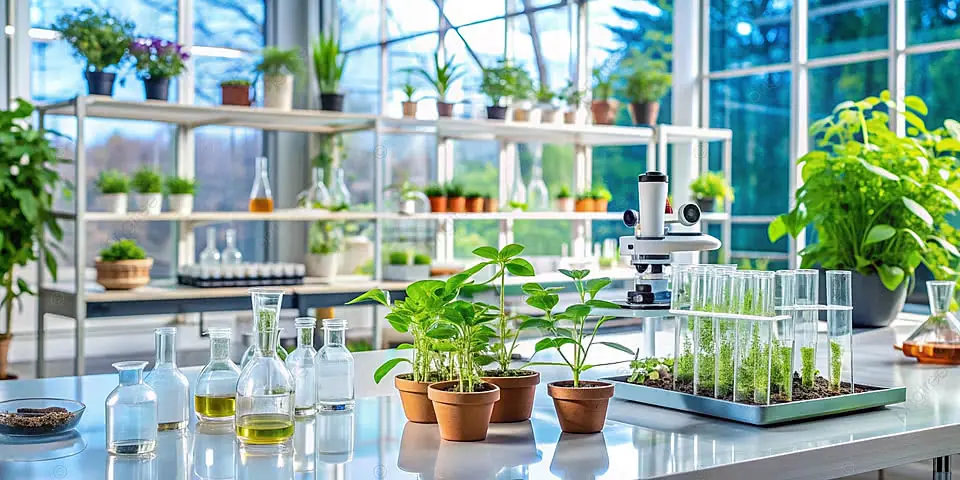
Composite Science Lab + Outdoor Campus- Soil testing kits: Chemical pH strips, digital moisture probes, nitrogen/phosphorus reagents
- Water quality testing kits: Dissolved oxygen meters, turbidity tubes, chlorine testing tablets
- Compact binoculars, pocket magnifying lenses, botanical specimen preservation jars
3Digital Creativity & Coding Days (2 Days)
ICT / Computer Laboratory- Block-based visual coding platforms (MIT Scratch, Blockly, Microsoft MakeCode)
- Educational robotics: Line-following vehicles, ultrasonic obstacle-avoidance kits
- Digital poster design, podcast recording, and interactive presentation tools
5. How Schools Must Re-engineer Existing Labs for NEP Compliance
Transitioning an existing school laboratory to satisfy NEP 2020 benchmarks involves four structural modifications:
Dismantle the "Teacher-Only" Demonstration Barrier
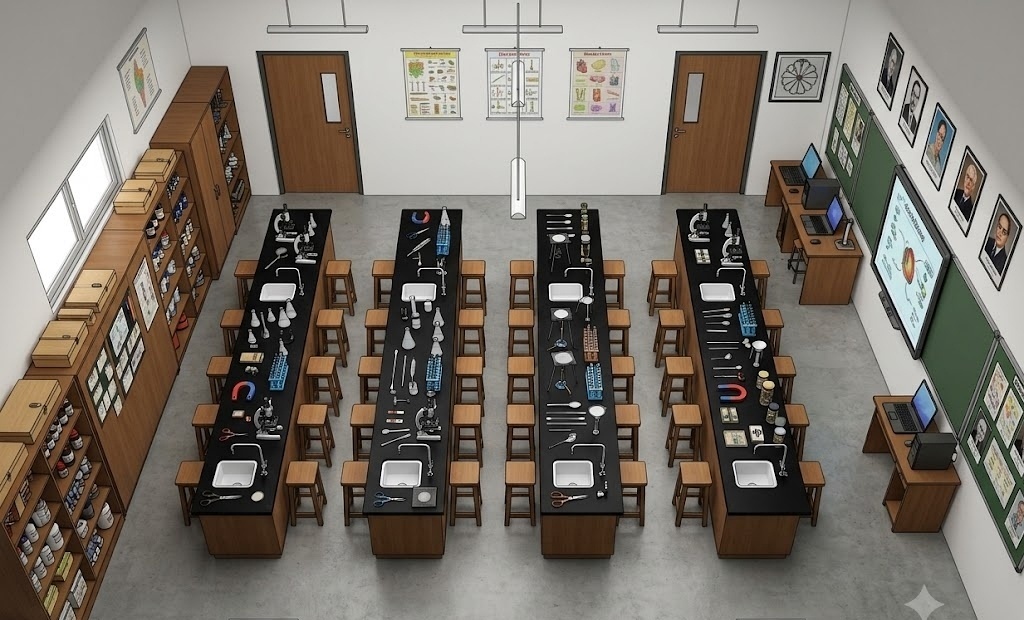
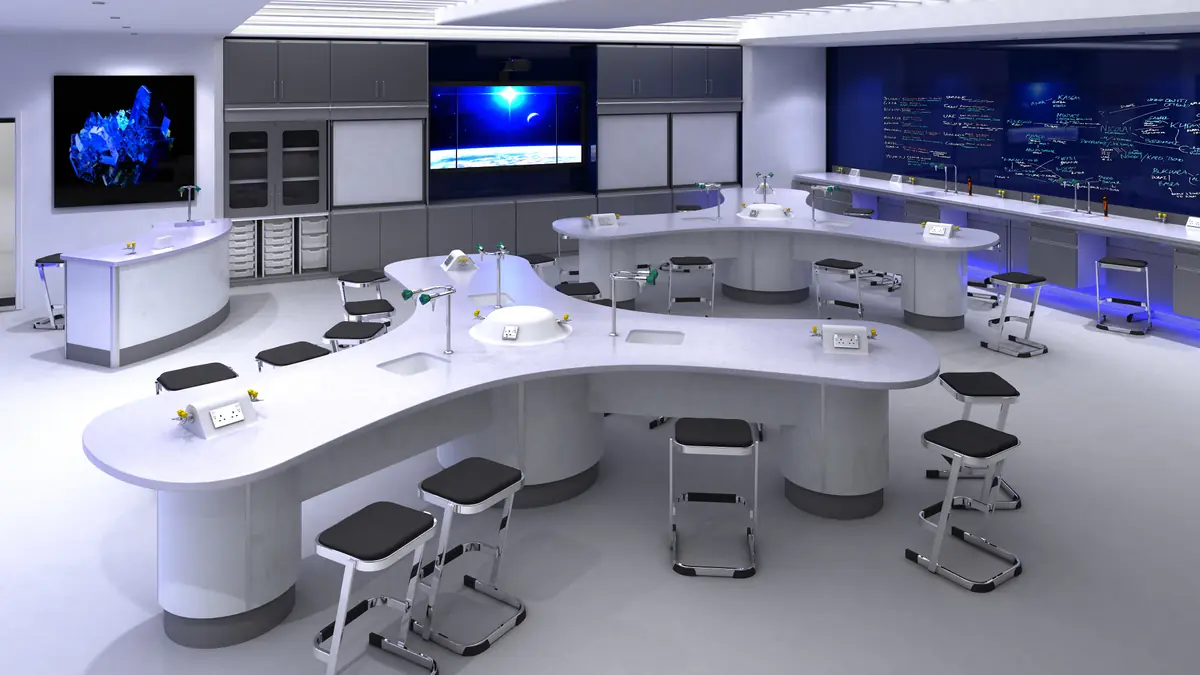
🔗 Lab Layout RedesignReplace the single elevated teacher podium with collaborative island worktables where every learner has independent access to apparatus.
Adopt the 2-in-1 Unified Hybrid Architecture
🔗 Hybrid ArchitectureIncorporate modular storage and retractable overhead power lines that allow the room to switch between wet science practicals and dry robotics/coding within minutes.
Embed Ongoing Competency Portfolios (PARAKH Aligned)
🔗 Assessment TransformationReplace one-off end-of-year practical tests with continuous laboratory logbooks, student digital portfolios, and open-ended inquiry projects.
Faculty Professional Upskilling
🔗 Faculty TrainingConduct hands-on teacher workshops on safety protocols, 3D printer operation, and facilitating inquiry-driven classroom debates.
6. Affiliation & Inspection Implications under NEP 2020
💡 Inspection Directive: Laboratory facilities can no longer be prepared solely for annual inspection visits; regulatory boards verify continuous student logbooks and ongoing practical records.
Frequently Asked Questions (FAQ)
Is coding and hands-on lab work mandatory for Class 6 under NEP 2020?
Yes. Paragraph 4.25 of NEP 2020 explicitly mandates the introduction of coding and vocational hands-on practical skills beginning in the Middle Stage (Class 6).
What are 10 Bagless Days and how should schools schedule them?
Students in Classes 6 to 8 participate in 10 school days without backpacks, engaging in hands-on vocational trades with local artisans (carpenters, potters, electricians) or conducting exploratory STEAM projects in school laboratories.
Can existing science laboratories be upgraded to NEP compliance without heavy civil demolition?
Yes. Under CSEEL’s 2-in-1 Unified Hybrid Architecture, existing science benches can be retrofitted with modular mobile storage, robotics modules, and multi-disciplinary kits without structural alterations.
How are Arts and Sciences integrated (STEAM) under NEP 2020?
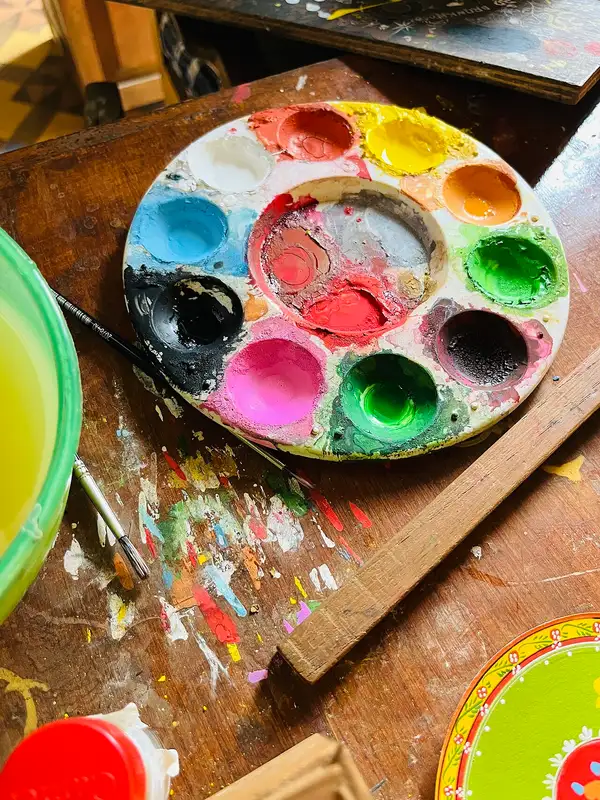
Students explore interconnected projects such as the physics of color and light (optics and spectroscopy), the chemistry of photography and natural pigments, and 3D architectural modeling.
Devendra Singh
Advising educational leadership on NCF-SE 2023 alignment, 10-bagless day vocational integration, computational thinking, and competency-based assessment.
Explore Other School Lab Solutions
Beyond Composite Science Labs, CSEEL designs and equips turnkey NEP 2020 and NITI Aayog aligned innovation labs across India.
 NITI Aayog (P1–P4)
Atal Tinkering Lab (ATL)
Turnkey setup for NITI Aayog AIM packages with 3D printers, electronics, and rapid prototyping.
- Packages P1 to P4 complete hardware & 3D printers
- Arduino, sensors, mechanical tools & mentor training
 CBSE Skill 417 & 843
Artificial Intelligence & ML Lab
Future skills lab with computer vision rigs, edge AI accelerators, and Python neural network tools.
- Edge AI vision cameras & Coral accelerators
- Python SDK, OpenCV & hands-on student projects
 Circular Skill-75/2024
Composite Skill Lab
Mandatory vocational lab for Classes 6–12 with AI, coding, robotics, and 33 CBSE skill subjects.
- Option A (600 sq ft) or Option B (2x 400 sq ft)
- 33 vocational modules including AI Code 417 & 843
 Senior Secondary (11–12)
Advance Composite Science Lab
High-end interdisciplinary research lab with analytical spectrophotometers and research microscopes.
- Digital spectrophotometer, research microscopes & centrifuge
- Fume exhaust hood & Class 11-12 research stations
 ISRO Space Aligned
Astronomical & Space Lab
Interactive celestial observatory with motorized GoTo telescopes, solar filters, and planetarium software.
- Motorized 8" Schmidt-Cassegrain tracking telescope
- H-alpha solar filter, digital planetarium & astrophotography
 DGCA Micro-Aviation
Aerospace & Drone Lab
Aeronautical wind tunnel simulators, modular quadcopter kits, flight simulators, and safety net cage.
- Modular DIY multirotor drone kits & flight simulators
- Wind tunnel lift/drag test kits & flight safety netting
 Industry 4.0 Robotics
Robotics & IoT Super-Lab
Industrial kinematics, multi-sensor autonomous rovers, smart IoT cloud, and WRO competition tracks.
- 4-DOF/6-DOF robotic arms & autonomous rovers
- ESP32 wireless mesh & World Robot Olympiad mats
 NEP 2020 Makerspace
Design Thinking & Innovation Lab
Human-centric design studio with enclosed laser cutters, vinyl plotters, and woodworking workbenches.
- Enclosed laser cutter/engraver & vinyl plotter
- Heavy-duty ergonomic maker workbenches & tool kits
 Spatial Computing
AR / VR Immersive Science Lab
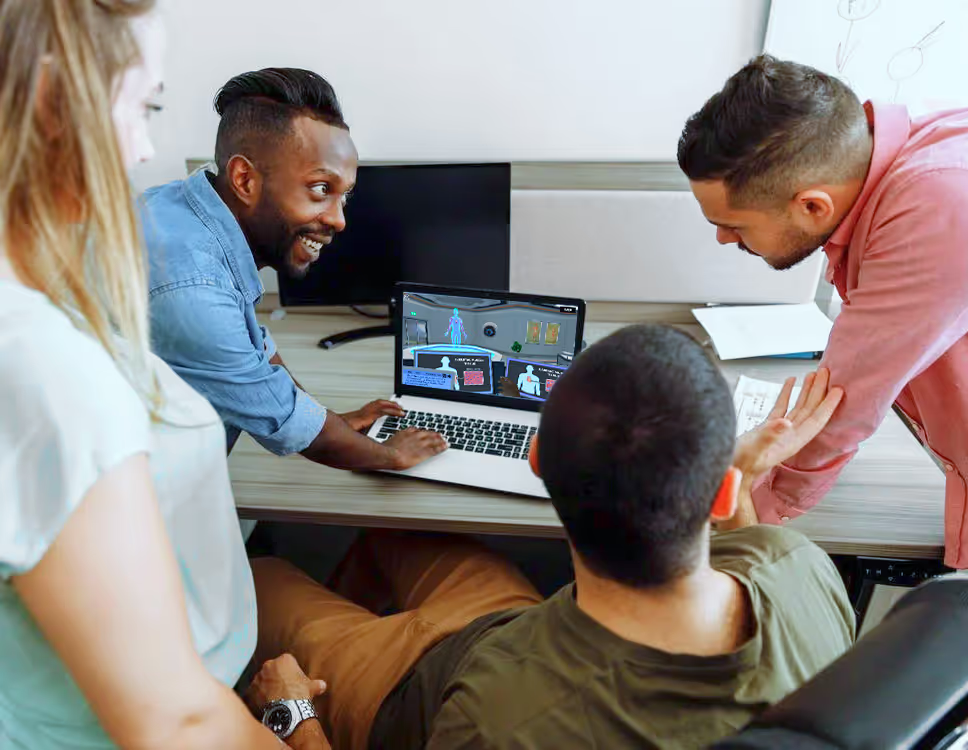
Virtual reality suites for 3D molecular biology, virtual dissections, and risk-free hazardous chemistry.
- Standalone 6-DoF VR headsets with teacher dashboard
- Virtual anatomy & chemistry simulations with zero hazard
 CBSE Math Lab Norm
Vedic & Experiential Math Lab
Eliminates math phobia through tactile geometric proof solids, algebra tiles, clinometers, and abacus.
- Tactile pythagoras models, algebra tiles & clinometers
- Vedic arithmetic abacus & chapter-wise NCERT kits
 Digital Phonetics
Language & Phonetics Lab
Interactive acoustic booths with AI-powered pronunciation waveforms, debate recording, and fluency trainers.
- Student audio terminals with master teacher console
- Real-time voice waveform matching for neutral accent
Planning Multiple Labs for CBSE Affiliation or PM SHRI Grant?
CSEEL offers integrated turnkey packages for Composite Labs, Atal Tinkering Labs (ATL), AI & Robotics Suites under a single audit-ready warranty with 3D CAD plans.