
Showing 10 of 10 Mathematics Experiments
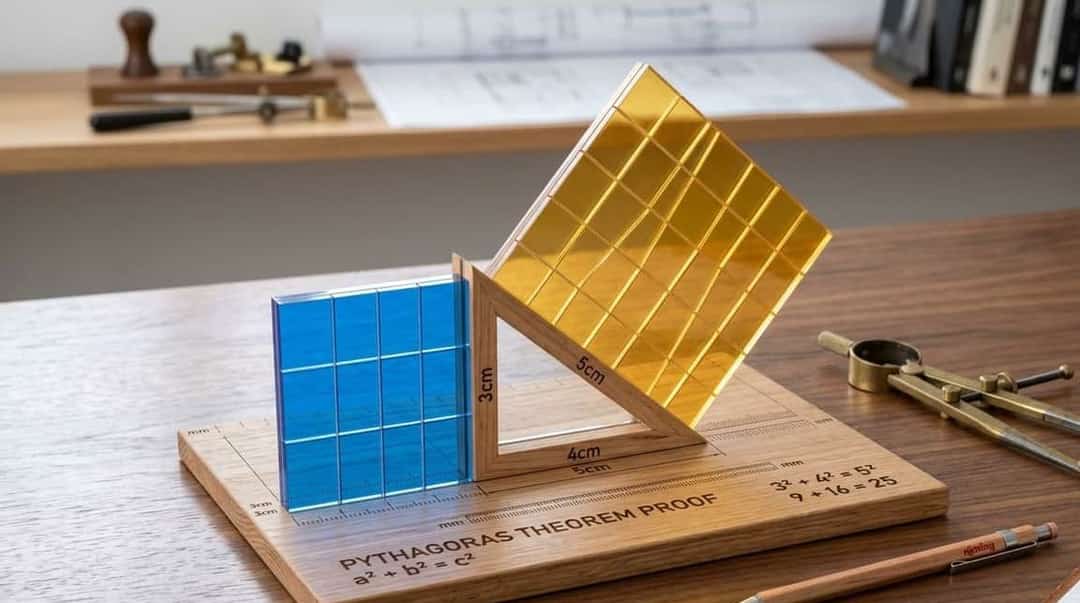
Geometric Verification of Pythagoras Theorem
Verify the Pythagorean Theorem (a² + b² = c²) for a right-angled triangle by cutting and rearranging unit squares and algebraic dissection puzzles on graph board.
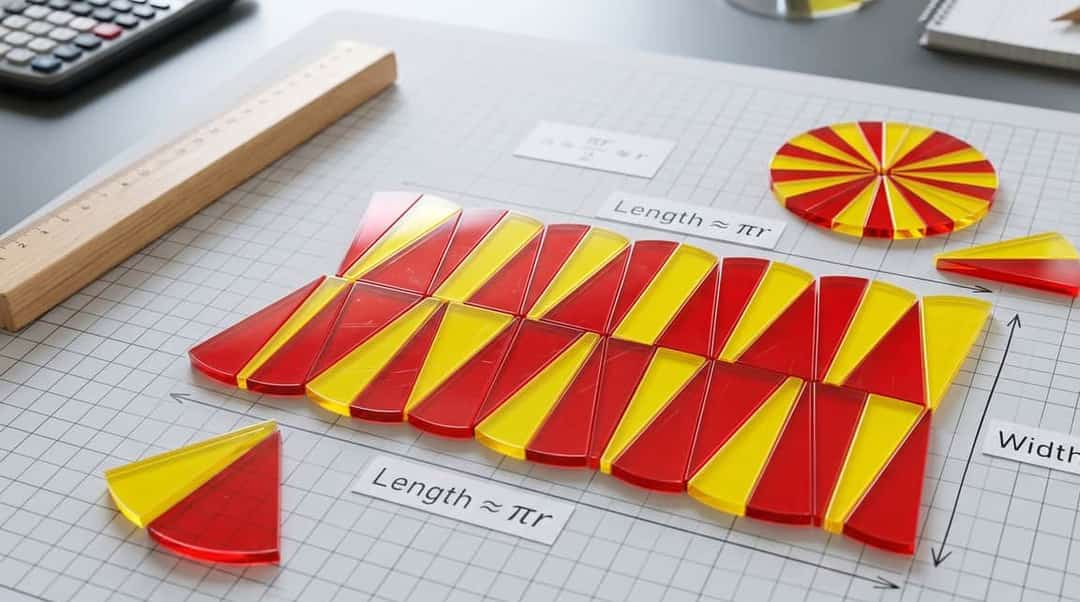
Area of a Circle Formula via Sector Partitioning
Derive and verify the formula for the area of a circle (Area = π·r²) by partitioning a circle into 16 and 32 congruent sectors and rearranging into an approximate rectangle.
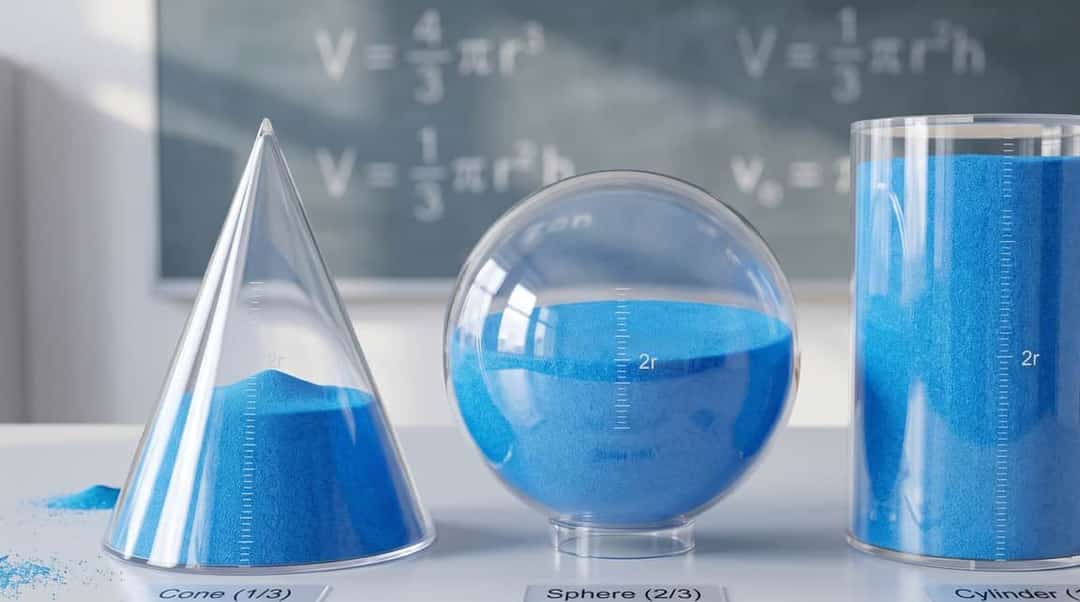
Surface Area & Volume Relationships: Sphere, Cone, and Cylinder
Verify Archimedes' ratio of volumes and surface areas between a cone, a sphere, and a cylinder having identical radius (r) and height (h = 2r) using dry fine sand displacement.
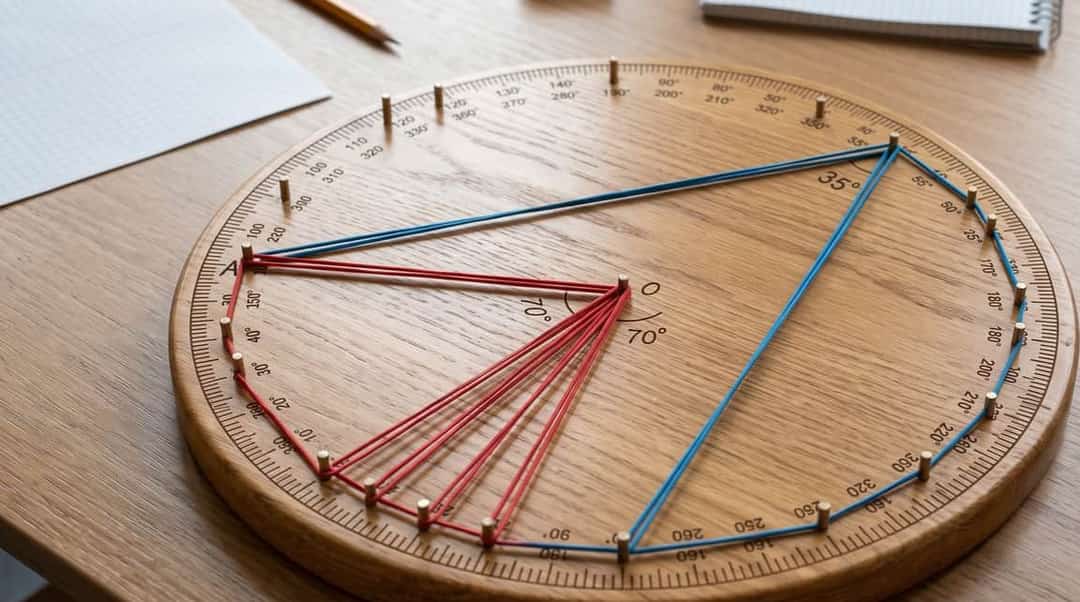
Angle Subtended by an Arc at the Center vs Circumference
Verify that the angle subtended by an arc at the center of a circle is double the angle subtended by it at any point on the remaining part of the circle (Angle at Center Theorem).
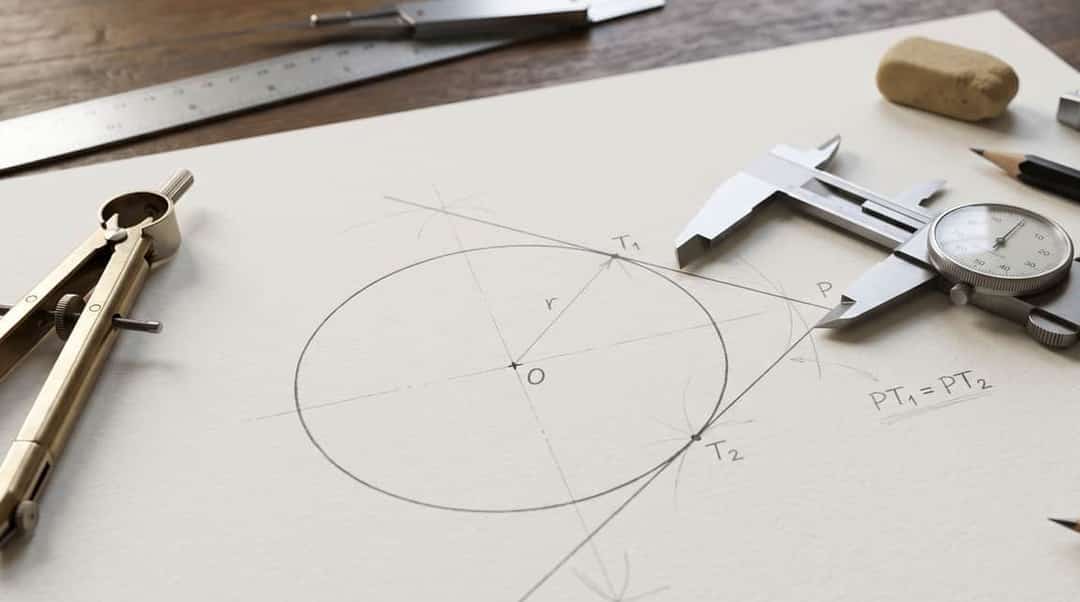
Equality of Tangents Drawn from an External Point to a Circle
Verify that the lengths of tangents drawn from an external point to a circle are equal (Theorem 10.2) through paper folding, Euclidean geometric construction, and RHS congruency.
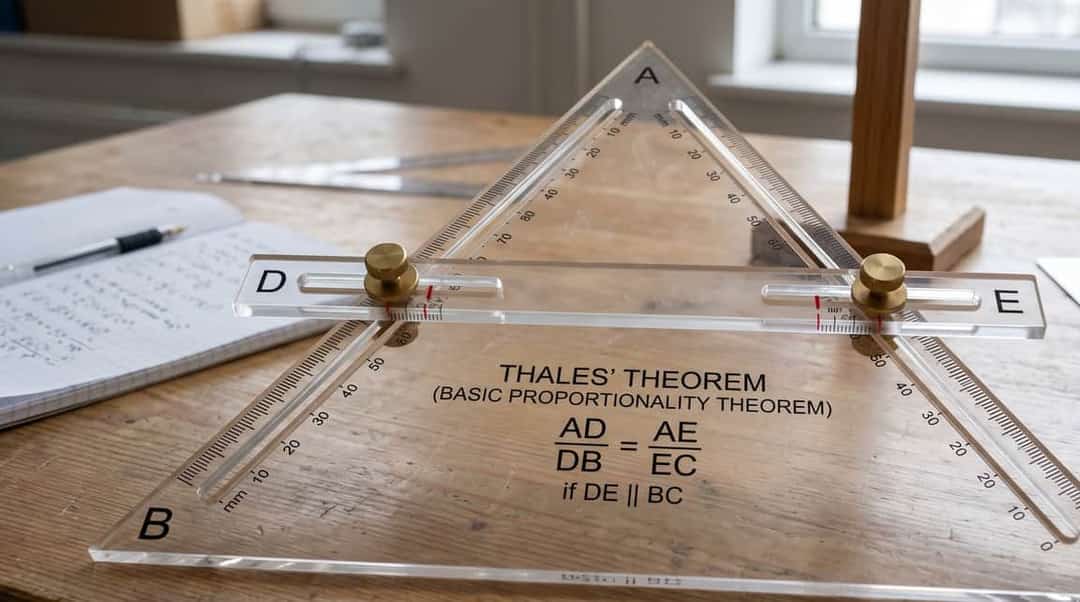
Basic Proportionality Theorem (Thales' Theorem) Verification
Verify Thales' Basic Proportionality Theorem: If a line is drawn parallel to one side of a triangle to intersect the other two sides in distinct points, the other two sides are divided in the same ratio (AD/DB = AE/EC).

Sum of First n Natural Numbers via Staircase Model
Derive and verify the arithmetic progression formula for the sum of the first n natural numbers (S_n = n(n+1)/2) using a physical 2D staircase model of unit square tiles.
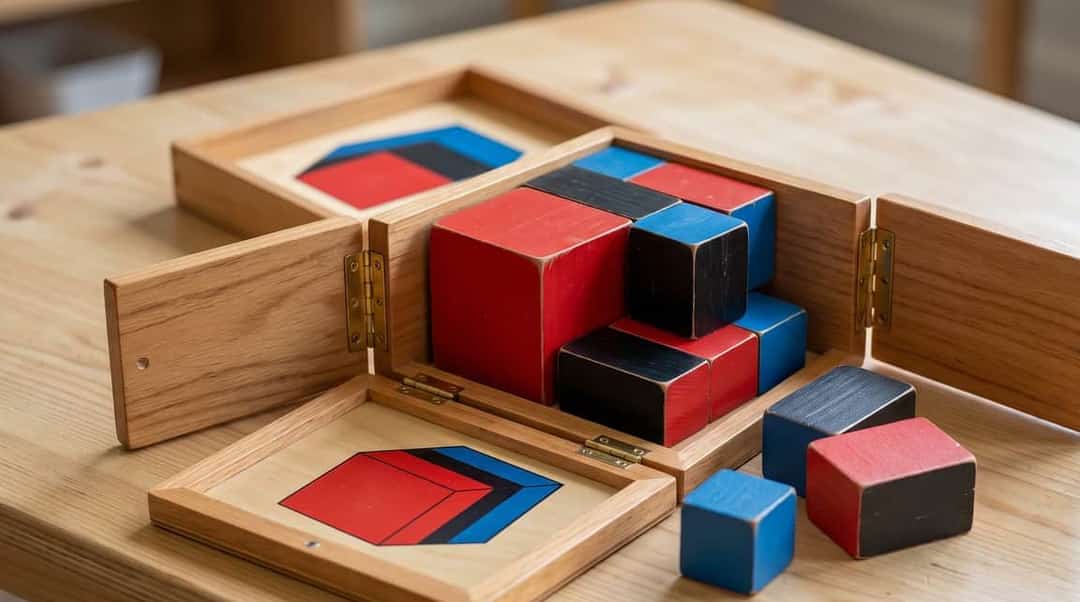
Algebraic Identity (a + b)³ 3D Dissection Model
Verify the algebraic identity (a + b)³ = a³ + 3a²b + 3ab² + b³ geometrically using a set of 8 physical 3D volumetric acrylic blocks of dimensions a and b.
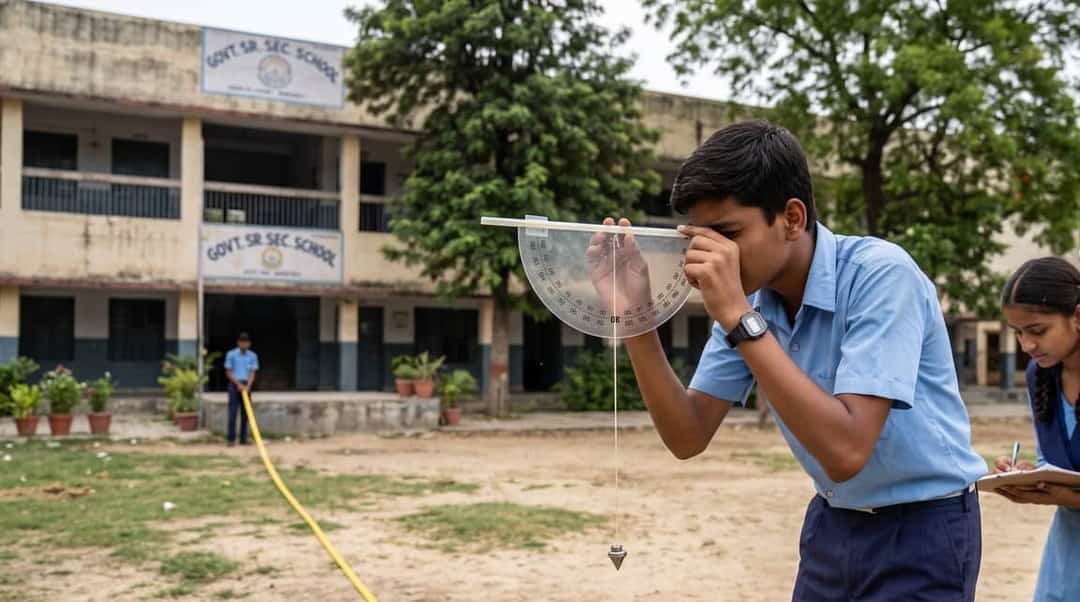
Trigonometric Height Estimation using a Handmade Clinometer
Construct an optical clinometer and determine the height of an inaccessible tall object (school building, tree, or flagpole) using the trigonometric tangent ratio (tan θ = opposite / adjacent).
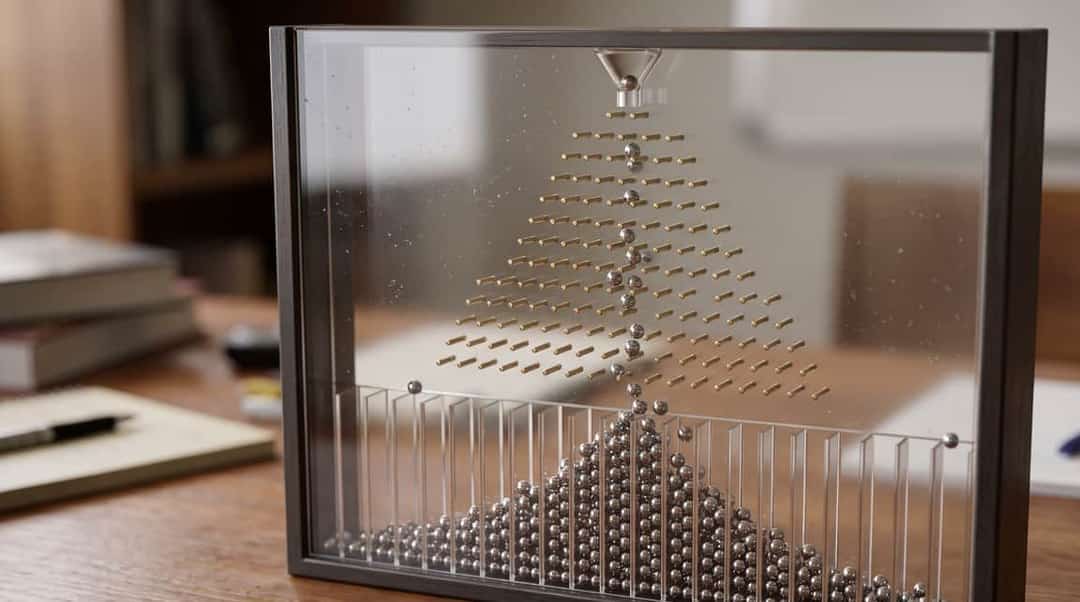
Galton Board & Experimental Verification of Normal Distribution
Demonstrate the Central Limit Theorem and normal (Gaussian) distribution curve by dropping 1,000 steel ball bearings through a triangular quincunx pegboard (Galton Board).
Need Additional Practical Modules or Custom Lab Setups?
We have 1,000+ experiments covering CBSE, ICSE, and state boards. For specialized kits, custom simulations, or school demo sessions, reach out directly to our team.
Get Physical DIY Experiment Kits for Mathematics
Order complete lab kits with pre-measured non-toxic reagents, electronic sensors, optical prisms, and ATL tinkering components delivered directly to your school or home.
Explore Other STEAM Subjects
Swipe horizontally to switch between curriculum labs